How to Talk to Grandkids About Car Rules
The conversation works better as a short, specific agreement than as a lecture, and it matters most for a grandchild who is a newer driver or who drives your car.
Set a few clear rules, not a long talk
The grandkids who listen are the ones given two or three specific rules instead of a long speech. Pick what actually worries you, phones, passengers, night driving, speed, and say it plainly rather than wrapping it in a general warning about being careful.
It helps to frame it as what you need, not what they're doing wrong. A grandparent who says 'I need to know you're not texting when you drive my car' gets a different reaction than one who says 'you kids are always on your phones.' The second one invites an argument. The first one is just a fact about what matters to you.
Whether they're driving your car or their own changes what you can ask
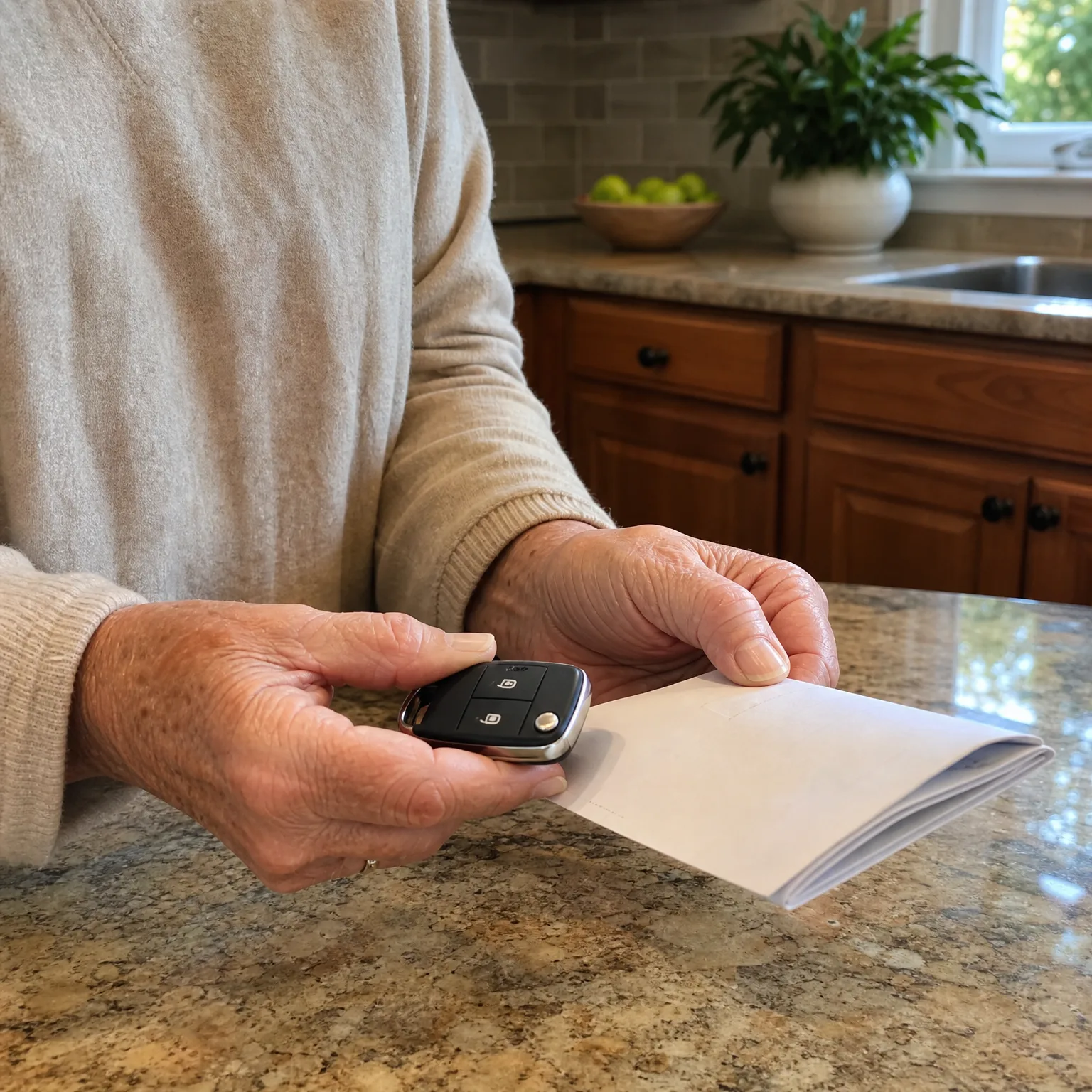
If your grandchild drives a car you own, or a car on your insurance policy, you have real standing to set conditions. You can say no phone use, no extra passengers, no driving after dark, and tie that to whether they get the keys again.
If they drive their own car or one owned by their parents, you're offering guidance, not setting a rule they're bound to follow. That doesn't make the conversation pointless, but it changes the tone. It's more like sharing what you've learned than laying down terms.
Either way, it's worth asking the parents what rules they've already set before you add your own. A grandchild who hears different rules from different adults usually just follows whichever one is loosest.

A new driver needs different rules than one who's had a license for years
A grandchild in their first year or two of driving is still building judgment, and the rules that help most are concrete limits: no driving in bad weather alone, no highway driving yet, a cap on how many friends can be in the car. These aren't insults to their ability. They're the same limits most new drivers are given regardless of how careful they are.
An older grandchild who's been driving for years generally needs fewer restrictions and more specific reminders, about distraction, about speed in certain situations, about what to do if they're ever pulled over. Treating a twenty five year old like a fifteen year old tends to end the conversation before it starts.
If the car your grandchild drives is insured through you or a family policy, ask your insurer directly what a new or young driver on that policy means for coverage. That answer depends on the insurer and the state, and it's worth knowing before an incident, not after.
Questions people ask about this
What rules should a new driver follow in someone else's car?
Most families start with limits on passengers, phone use, and night driving, since those are the situations where new drivers struggle most. The specific rules should come from whoever owns or insures the car, since they're the one with the most at stake if something goes wrong.
Should grandparents let grandkids drive their car?
This depends on your comfort level and on what your insurance allows, since adding a driver or letting someone drive your car can affect your policy. Check with your insurer first about how an occasional driver is treated before you hand over the keys.
How do you talk to a teenager about driving without lecturing them?
Short, specific requests work better than a long talk, because a teenager can hear 'put your phone in the glovebox' as a rule but hears a ten minute speech as an attack. Naming exactly what worries you, rather than generalizing about their age or generation, tends to land better.
What should you do if your grandchild breaks the driving rules you set?
What you can actually do depends on whether it's your car and your insurance, since that's what gives the rule any weight. If it is, the consequence usually has to be tied to that, like losing access to the car for a while, rather than just a conversation that repeats the original rule.
Does letting your grandchild drive your car affect your insurance?
It can, depending on how often they drive it and what your insurer's rules are about occasional or listed drivers. This is worth a direct call to your insurer rather than a guess, since the answer varies by company and by state.
If your grandchild is going to be driving your car regularly, it's worth seeing how that changes what you pay.

Before the conversation, decide which two or three rules matter most to you, and whether they apply to your car, their car, or both. If your grandchild will be driving a car on your insurance, call your insurer first and ask how an occasional or new driver affects your coverage, so you're not guessing when you talk to your grandchild. Bring up what the parents have already told them, so you're not contradicting another adult without knowing it. Keep the conversation short and specific rather than a single long talk, and plan to revisit it rather than cover everything once. If you're the one paying for insurance on a car they'll be driving, this is also a good week to compare quotes and see whether adding a younger driver changes what you should be paying.