Should Grandparents Pay for a Teen Driver Course
It can be worth it if the course lowers the premium on a policy that actually benefits the household paying for it.
It depends on whose policy gets the discount
If the teen is added to a grandparent's policy, or the grandparent is paying premiums directly on a car the teen drives, then paying for the course can lower that bill and the money comes back around. If the teen is on a parent's policy instead, the discount shows up there, not on anything the grandparent pays.
The course itself usually costs far less than even one year of added premium for a new driver. So the question isn't really whether the course is worth paying for. It's whether the grandparent is the one who sees the saving, or whether they'd be covering a cost that benefits someone else's policy.
Whose insurance policy the teen is actually on
Start by asking which policy lists the teen as a driver. If it's the grandparent's own policy, paying for the course and making sure the discount gets applied protects their own premium directly.
If the teen is on a parent's policy, the grandparent paying for the course is really a gift to that household's insurance bill. That can still be a reasonable thing to do. It just isn't the grandparent's own rate going down.
Some insurers also let a young driver carry a discount onto a future policy of their own once they aim out on their own. Ask the insurer directly whether that applies, since it isn't the same everywhere.
Either way, the saving only happens if someone sends the course certificate to the insurer. The course by itself does nothing to the premium until that step happens.
What people get wrong about the discount
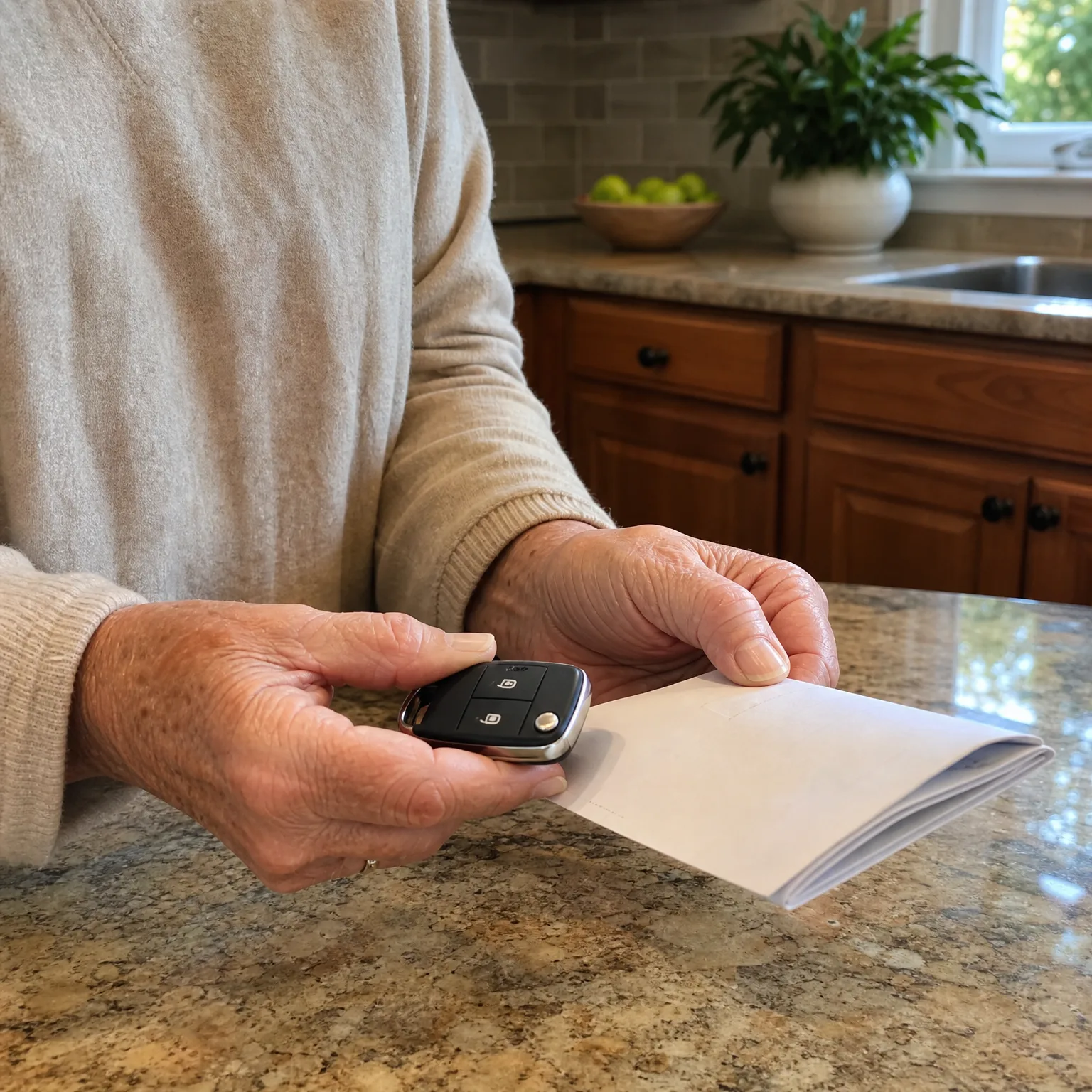
The most common mistake is assuming the discount is automatic once the course is finished. It isn't. The insurer has to be told, usually with a certificate or some proof of completion, and someone has to actually send it in.
Another thing worth checking before paying for any course is whether the insurer only recognizes certain providers. Not every driver course qualifies for a discount with every company, so it's worth asking the insurer which courses they accept before signing the teen up for one.
It's also easy to assume the discount is permanent. Some insurers apply it for a set period and expect it to be renewed or re-verified later. Ask how long the discount lasts and what happens when that period ends.
Finally, people sometimes weigh the cost of the course against the discount alone, without factoring in that a teen driver raises the premium substantially regardless. The course doesn't erase that increase. It just softens it somewhat.
Questions people ask about this
Does the discount apply to the whole policy or just the teen's portion?
That depends on how the insurer prices the policy. Some apply the discount to the specific line for the teen driver, others factor it into the household rate as a whole. Ask the insurer how it's calculated on this policy.
Can a grandparent add a teen to their policy instead of the parent's?
Usually yes, if the teen lives with or regularly drives a car registered to the grandparent, but insurers have their own rules about who can be listed as a driver on a policy. Check with the insurer directly, since this varies by company and by state.
Will the course lower the grandparent's own premium if the teen isn't on their policy?
No. A discount only affects the policy the teen is actually listed on. If the teen is on a parent's policy, that's where any saving from the course would show up.
How long does a teen driver course discount usually last?
That's set by the insurer, not by any general rule, so it can run for a fixed period or need renewal. Ask the insurer directly how long the discount applies and whether proof needs to be resubmitted later.
Is it better to pay for the course or just accept the higher premium?
For most households the course costs less than the premium increase it offsets, but that math depends on the specific insurer's pricing and the course's cost. Compare the two numbers directly with the insurer before deciding.
See what adding a teen driver would actually do to the premium before deciding who pays for what.
Before paying for a course, find out which policy the teen will actually be listed on and ask that insurer whether they offer a discount for completing one. Ask which course providers they accept, since not all of them qualify. Once the teen finishes the course, get the certificate and send it in yourself rather than assuming it happens automatically. Ask how long the discount lasts and what proof might be needed to keep it. If the teen is on a parent's policy, loop them in so the certificate reaches the right insurer rather than sitting unused.